
The LinkedIn Algorithm in 2026: How It Actually Works (and How to Win)
If your LinkedIn reach feels unpredictable in 2026, you're not imagining it. The algorithm has kept evolving — rewarding genuine expertise and meaningful conversation, while quietly throttling the cheap tricks that used to work.
The good news: once you understand how the 2026 algorithm decides who sees your posts, the strategy becomes obvious. This guide breaks down the full system in plain English, then gives you a concrete playbook to grow.
New here? Start with our explainer on how the LinkedIn algorithm works, then come back for what's changed in 2026.
What the LinkedIn Algorithm Is Actually Trying to Do
Strip away the mystery and LinkedIn's algorithm has one job: keep professionals coming back by showing them content they find genuinely valuable.
That single goal explains almost every behavior you'll read about below. LinkedIn doesn't want viral fluff that gets a quick laugh and adds nothing. It wants posts that make people stop, read, learn, and engage — because that's what keeps its users logging in tomorrow.
In 2026, that intent is stronger than ever. The platform has leaned hard into knowledge and expertise: it would rather show 500 of the right people a useful post than blast a mediocre one to 50,000.
How the Algorithm Ranks Your Post: The 4 Phases
Every post you publish goes through roughly the same journey.
Phase 1: The spam & quality filter
The instant you hit publish, LinkedIn classifies your post as spam, low-quality, or clear. It checks for things like external links, engagement bait ("comment 'YES' below!"), excessive hashtags, and AI-generated-looking filler. Fail this check and your reach is capped before you even start.
Phase 2: The "golden hour" test
LinkedIn shows your post to a small initial sample of your network and followers. How those people respond in the first ~60–90 minutes is the single biggest signal of whether your post lives or dies. It's watching:
- Dwell time — how long people stop and actually read
- Meaningful comments — thoughtful replies, not one-word drops
- Reshares and saves — the strongest signals of real value
- Click-to-expand — did people hit "…see more"?
Phase 3: Relevance & expansion
If the early signals are strong, LinkedIn expands distribution — but not randomly. It pushes your post to 2nd- and 3rd-degree connections who are topically relevant. This is why niche consistency matters: the algorithm has learned what you post about and who cares about it.
Phase 4: The long tail
Great posts keep surfacing for days or even weeks as people discover them through search, hashtags, and their feed. Evergreen, genuinely useful content benefits most here — another reason 2026 rewards substance over hot takes.
What the 2026 Algorithm Rewards
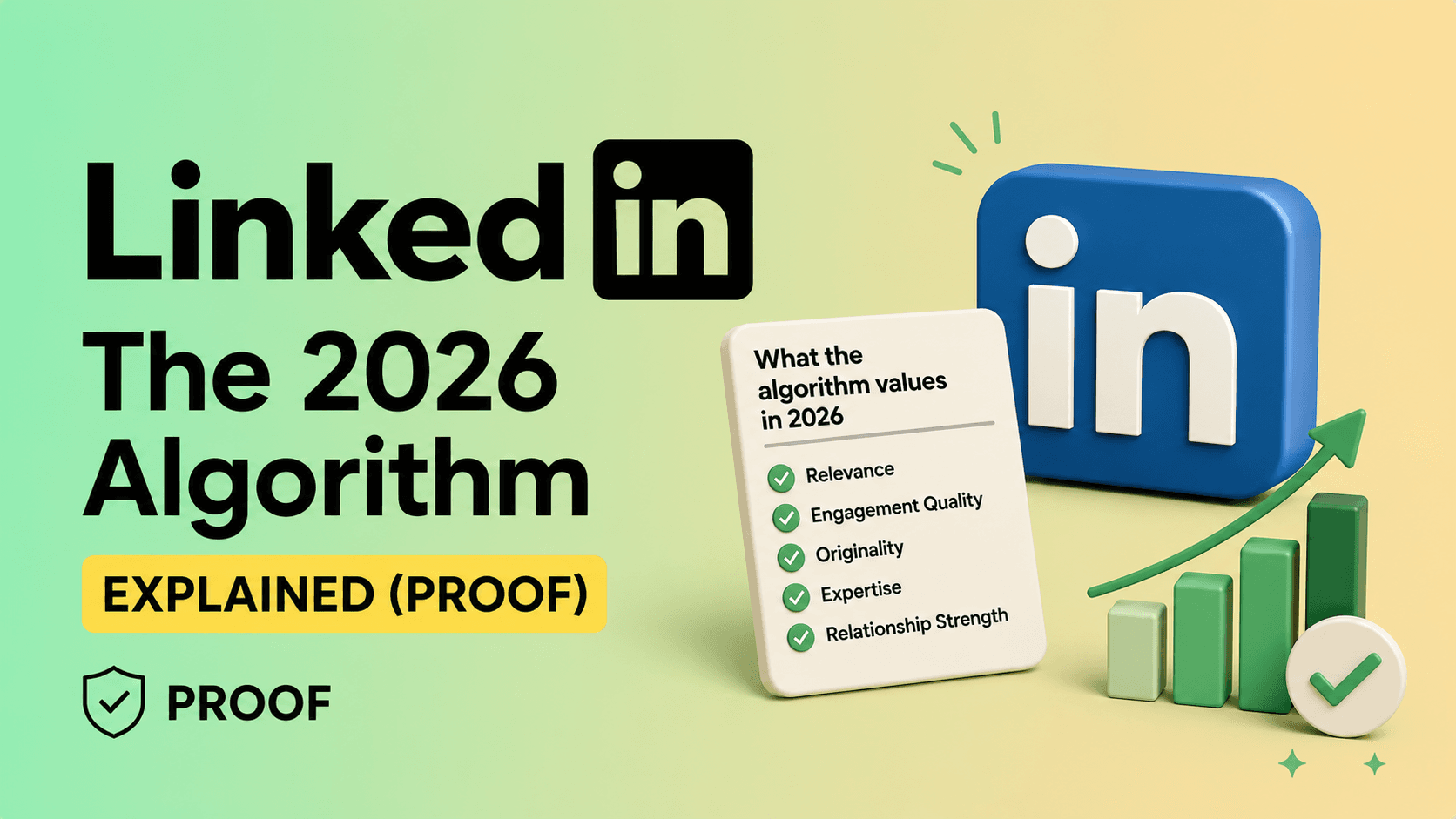
These are the signals that move the needle today:
1. Dwell time over vanity metrics
A like takes a fraction of a second and tells LinkedIn almost nothing. Time spent reading tells it everything. Posts that hold attention — strong hooks, scannable formatting, a reason to read to the end — outperform posts that just collect likes.
2. Meaningful comments
Comments are weighted far more heavily than likes, and quality matters more than quantity. A handful of genuine, multi-sentence conversations beats fifty "🔥🔥🔥" replies. Replying to your own comments (thoughtfully) extends the conversation and the post's life.
3. Topical authority and consistency
LinkedIn rewards people who post consistently about a clear set of topics. When you're known for a niche, the algorithm knows exactly who to show your content to — and that audience is primed to engage.
4. Real expertise and "knowledge"
The platform increasingly favors first-hand experience, specific frameworks, and genuine insight over generic motivational content. "Here's exactly how I did X" beats "Believe in yourself."
5. Native, dwell-friendly formats
Text-and-image posts, document carousels, and native video all perform well — because they keep people on the post. Carousels in particular drive high dwell time as readers swipe through.
What It Quietly Suppresses
Just as important — the things that cap your reach in 2026:
- External links in the post body. LinkedIn doesn't want to send people off-platform. Put links in the first comment or add them after the post is live.
- Engagement bait. "Comment 'GROW' and I'll DM you the guide" is detected and down-ranked.
- Pods and inauthentic engagement. Coordinated like/comment rings are increasingly ignored or penalized.
- Generic AI filler. Obviously templated, say-nothing content struggles. (AI used well — to help you say something real — is fine; AI used to mass-produce empty posts is not.)
- Posting too often. Flooding the feed splits your own audience and can suppress each post. For most people, once a day max is plenty.
- Going dark. Inconsistency kills momentum — gaps between posts reset your warm-up with the algorithm.
The Golden Hour Is Everything
Because Phase 2 decides your post's fate, the first 60–90 minutes after publishing are the highest-leverage time you have. To win it:
- Post when your audience is actually online (see our best days and times to post on LinkedIn).
- Reply to every comment quickly — each reply is a fresh engagement signal and invites more.
- Spend 15–30 minutes engaging on others' posts right before and after you publish, so you're active and visible.
- Lead with a hook that earns the click on "…see more."
Your 2026 LinkedIn Algorithm Playbook
Put it all together and the strategy is refreshingly simple:
- Pick a niche and post consistently about it so the algorithm knows who to serve you to.
- Open with a scroll-stopping hook — the first ~210 characters decide whether anyone reads on.
- Write for dwell time: short paragraphs, white space, a payoff at the end.
- Aim for comments, not likes — ask a genuine question, share a real opinion.
- Keep links out of the body; drop them in the comments.
- Engage for 15–30 minutes daily — visibility is a two-way street.
- Be consistent — 3–5 quality posts a week beats a daily firehose of filler.
None of this is a hack. It's just being genuinely useful, consistently. That's exactly what the 2026 algorithm is built to reward.
The Hard Part Isn't Strategy — It's Showing Up
You now understand the algorithm better than 99% of users. But knowing what to do and actually publishing strong posts several times a week are two very different things. You run out of ideas, time, and energy — and consistency quietly slips.
That's the gap LinkGenie closes. It's an AI LinkedIn post generator that helps you:
- Turn rough thoughts into hook-first posts that earn dwell time
- Stay consistent with a planned, scheduled content calendar
- Write in your voice — real insight, not generic AI filler the algorithm punishes
Understand the algorithm, then let LinkGenie help you feed it. Start for free.
Frequently Asked Questions
How does the LinkedIn algorithm work in 2026?
When you post, LinkedIn runs a spam/quality check, shows it to a small test audience during a "golden hour," then expands distribution to relevant 2nd- and 3rd-degree connections based on early engagement — especially dwell time, meaningful comments, and reshares. Strong posts keep surfacing for days.
What does the LinkedIn algorithm reward most?
Dwell time (how long people read), meaningful comments, reshares and saves, topical consistency, and genuine expertise. Quality engagement matters far more than likes.
Does LinkedIn suppress posts with external links?
LinkedIn tends to reduce reach on posts with links in the body, because it prefers to keep users on-platform. A common workaround is to put the link in the first comment instead.
How often should I post on LinkedIn in 2026?
For most people, 3–5 quality posts per week is ideal, and no more than once a day. Consistency beats volume — and flooding the feed can split your audience and suppress reach.
Does the algorithm penalize AI-generated content?
It penalizes generic, low-effort filler — whether human- or AI-written. AI used to help you express real, specific insight in your own voice is fine; mass-produced empty posts are not.
How important is the first hour after posting?
Very. The "golden hour" test largely determines how far your post travels. Post when your audience is online, reply to comments fast, and engage with others to maximize those early signals.
Want to consistently publish posts the 2026 algorithm loves? LinkGenie helps you write and schedule LinkedIn content that earns real engagement — in your own voice.